 Thailand
 Malaysia
 Singapore
 Indonesia
 Philippines
 Australia
 United
States
United
States United Kingdom
 India
India



































































 Thailand
 Singapore
 Indonesia
 Australia
 United States
 United Kingdom
What Is a Standing Desk and Can It Replace Your Traditional Computer Desk?

For decades, the standard computer desk has followed the same formula: a fixed-height surface designed for sitting. While this setup feels familiar and convenient, it quietly encourages one habit that many of us underestimate—prolonged sitting.
When you sit for hours without changing posture, your body absorbs the consequences. Shoulders round forward. The neck leans toward the screen. The lower back compresses under constant pressure. Over time, this static position can contribute to back pain, neck strain, poor circulation, and even mental fatigue.
A traditional desk doesn’t adapt to your body; your body adapts to it. And that adaptation often means slouching, shifting awkwardly, or staying in one rigid position just to get through the day.
This is where the concept of a standing desk becomes more than just a furniture trend. It represents a shift in how modern workspaces prioritize health, comfort, and productivity.
The Evolution of the Modern Desk
Work habits today look very different from those of the past. Remote work has become mainstream. Gaming and content creation demand long screen hours. Even casual tasks like studying or browsing often stretch into multi-hour sessions at a desk.
As screen time increased, so did awareness of posture-related problems. This sparked innovation in workspace design, leading to the rise of the adjustable standing desk. Rather than forcing users to remain seated, this modern solution allows flexibility—supporting both sitting and standing throughout the day.
In places like standing desk Thailand markets, demand has grown steadily as professionals and gamers alike look for smarter alternatives to traditional office desks.
What Is a Standing Desk ?

If you’ve ever wondered what is a standing desk, the answer is simple: it’s a desk designed to let you work while standing, with the option to adjust height as needed.
Unlike a fixed computer desk, a standing desk can move up and down. This flexibility allows users to switch between sitting and standing positions without changing their workspace setup.
The purpose isn’t to eliminate sitting altogether. Instead, it promotes movement. Alternating posture reduces static strain on the spine and encourages better circulation, helping you stay energized throughout the day.
Many models are also designed as an ergonomic standing desk, meaning they support natural body alignment—keeping your elbows at the right angle, wrists straight, and monitor at eye level.
Types of Standing Desks
Not all standing desks are built the same. Here are the main types you’ll encounter:
-
Fixed Standing Desk: A non-adjustable desk built at standing height. While simple, it lacks flexibility and may not suit everyone’s height.
-
Manual Adjustable Standing Desk: These desks use a crank or mechanical system to change height. They’re reliable and typically more budget-friendly.
-
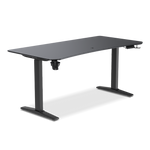
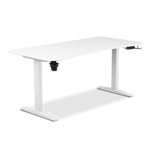
Electric Standing Desk: The most popular choice today, an electric standing desk uses a motorized system to adjust height smoothly at the press of a button. Some models even allow you to save preset heights for quick transitions.
For users who want maximum flexibility, the adjustable standing desk has become the gold standard.
How a Standing Desk Functions in Daily Use

Height Adjustment and Ergonomic Design
One of the biggest advantages of a standing table desk is precise height control. Proper desk height plays a crucial role in preventing strain.
When set correctly:
-
Elbows rest at approximately 90 degrees
-
Wrists remain neutral while typing
-
The monitor aligns with eye level
-
Shoulders stay relaxed instead of elevated
This alignment reduces unnecessary stress on the neck, shoulders, and lower back. The ability to fine-tune height makes the desk adaptable to different users and different tasks.
Adjustability is not just a convenience—it’s the foundation of ergonomic comfort.
Sit-Stand Transitions and Workflow Flexibility
Using a standing desk isn’t about standing all day. Instead, most users alternate positions every 30 to 60 minutes.
For example:
-
Sit while responding to emails
-
Stand during meetings or brainstorming sessions
-
Switch back to sitting for detailed tasks
These transitions keep blood flowing and reduce stiffness without interrupting productivity. The key benefit is movement—something traditional office desks simply don’t encourage.
Standing Desk vs Traditional Computer Desk
Ergonomics and Posture Comparison
A traditional computer desk is typically set at one height, around 70–75 cm. This might be suitable for some users but too high or too low for others.
Because it doesn’t adjust, many people compensate by:
-
Raising shoulders
-
Leaning forward
-
Crossing legs
-
Slouching
Over time, these habits strain the spine and muscles.
In contrast, an ergonomic standing desk adapts to your body. When standing, the spine naturally maintains a more neutral alignment. The hips open, shoulders align better, and the chest remains upright.
This doesn’t mean standing desks automatically fix posture—but they make healthy posture easier to maintain.
Productivity, Energy, and Comfort Differences
Many users report feeling more alert when using the best standing desk models regularly. Standing encourages subtle movement, which can help prevent that mid-afternoon slump.
Key differences often include:
Traditional Computer Desk
-
Encourages prolonged sitting
-
May lead to sluggishness after long hours
-
Limited adaptability
Standing Desk
-
Promotes movement
-
Supports better circulation
-
Offers dynamic work styles
For active tasks like presentations, video calls, or creative brainstorming, standing often feels more engaging. Meanwhile, adjustable functionality allows you to return to sitting whenever needed.
Can a Standing Desk Fully Replace a Traditional Computer Desk?
Tasks That Work Better on a Standing Desk
Most daily computer-based tasks can easily be performed on a standing desk:
-
Typing and data entry
-
Video meetings
-
Graphic design and creative work
-
Gaming sessions
-
Studying and research
In fact, for long hours at a computer, alternating between sitting and standing can make a noticeable difference in comfort.
For gamers or remote professionals in Thailand, many are now upgrading to modern adjustable models through platforms like TTRacing, which specialize in ergonomic workspace solutions.
When a Hybrid Setup Works Best
Despite the benefits, standing all day isn’t ideal either. Fatigue can occur if posture isn’t varied.
That’s why the real strength of an adjustable standing desk lies in its hybrid nature. It combines the best of both worlds:
-
Comfort of sitting when needed
-
Health benefits of standing
-
Flexibility for different tasks
Rather than replacing sitting entirely, it replaces rigidity.
Conclusion: Choosing the Right Desk for the Modern Workspace
A standing desk is more than just a trend—it’s a practical response to the limitations of the traditional computer desk.
It allows:
-
Height customization
-
Improved posture alignment
-
Increased movement throughout the day
-
Greater long-term comfort
Compared to fixed office desks, adjustable and electric models provide flexibility that better supports modern work habits.
For most users, especially those spending 6–8+ hours daily at a computer, a standing desk can effectively replace a traditional desk while offering additional ergonomic benefits.
If you’ve been relying on the same fixed-height computer desk for years, it may be time to rethink your setup.
An adjustable standing desk or electric standing desk isn’t just an upgrade in design—it’s an upgrade in how you work and feel every day. Whether you’re setting up a home office, improving your gaming station, or redesigning your workspace, exploring smarter desk solutions could be the change your body has been asking for.
Movement matters. Comfort matters. And the right desk can make all the difference.
Contact us for more details or to view various models on our website: https://TTRacing.co.th/ or chat with us via Line @TTRacing or Facebook: TTRacing Thailand. We are happy to provide consultation and service to you.
Follow news and great promotions from TTRacing Thailand at
Facebook: TTRacing Thailand
TikTok: TTRacing_Thailand (Live channel)
Instagram TTRacing_th
X: TTRacing
YouTube: TTRacing
Frequently Asked Questions (FAQ)
1. What is a standing desk?
A standing desk is a desk designed to let you work while standing, with adjustable height options that allow you to switch between sitting and standing positions
2. Do I need to stand all day when using a standing desk?
No. The purpose of a standing desk is not to eliminate sitting but to promote movement. Most users alternate between sitting and standing every 30–60 minutes
3. What are the main types of standing desks?
The three main types are fixed standing desks, manual adjustable standing desks, and electric standing desks
4. How does a standing desk improve posture?
An ergonomic standing desk allows proper alignment—keeping elbows at 90 degrees, wrists neutral, monitor at eye level, and shoulders relaxed—reducing strain on the neck and back
5. Is a standing desk better than a traditional computer desk?
Standing desks offer greater flexibility and encourage movement, which can improve circulation, reduce stiffness, and support better posture compared to fixed-height desks
6. Can a standing desk fully replace a traditional desk?
Yes, especially if it is an adjustable or electric model. It provides both sitting and standing functionality, effectively replacing the rigidity of traditional desks
7. Who should consider using a standing desk?
Anyone who spends long hours (6–8+ hours daily) working at a computer—such as remote workers, gamers, students, or office professionals—may benefit from an adjustable standing desk